CITY'S ATLAS
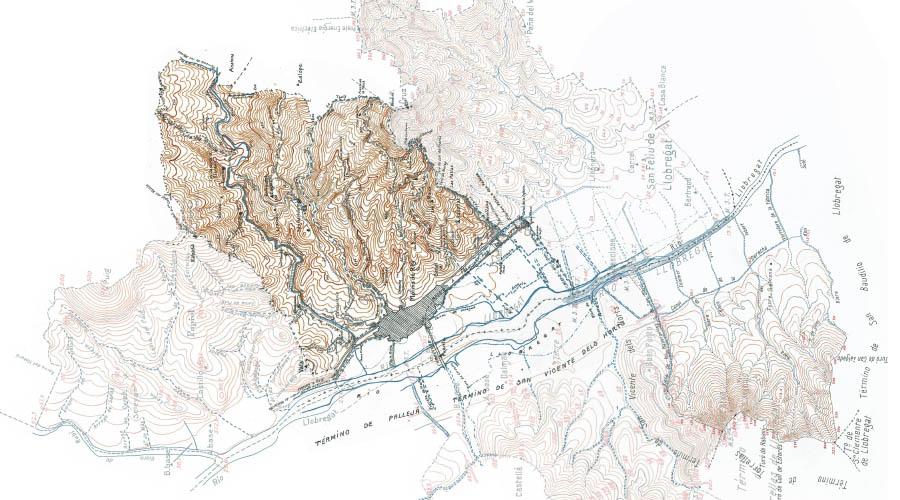
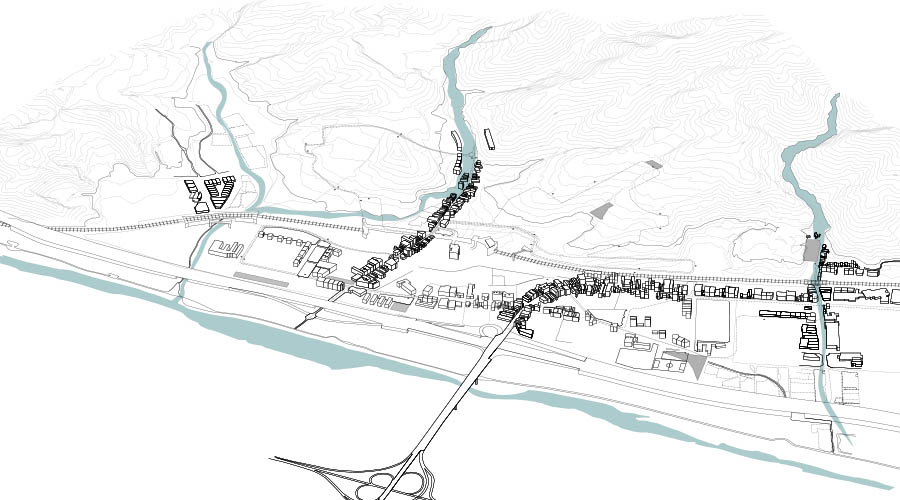
Thanks to the configuration of the atlas of the city we can establish two concepts basic to work in the transformation of Molins de Rei. On the one hand it is necessary work in the [change of mobilities], investing the power that the fast mobilities (car, bus and transport to the industrial zone) by mobilities slow. On the other hand, the [recovery of hydrographic courses] such as streams and channels,will provide the city with new points of reference, while these are connected to through the slow mobility network.
SEWING NATURAL ENVIRONMENTS
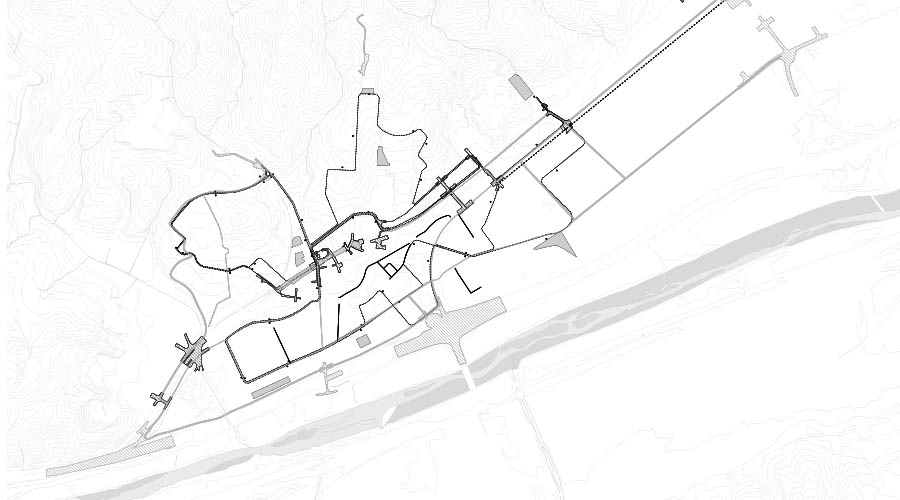
With this in mind, selection of four transformation axes of the city that It allows sewing the two natural environments that surround the city: the river and Collserola. These four axes of transformation will be added the recovery of the seaway of the Infanta, who connect with these four axes to each other, going to look for the connection direct with the river Llobregat at its point of contact with the agricultural area of Molins de Rei
NEW CIVIC AXES
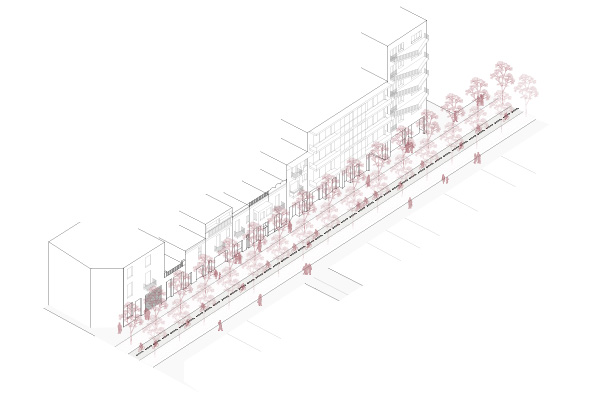
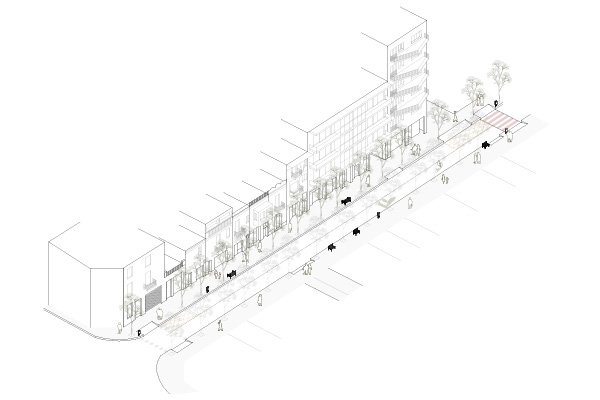
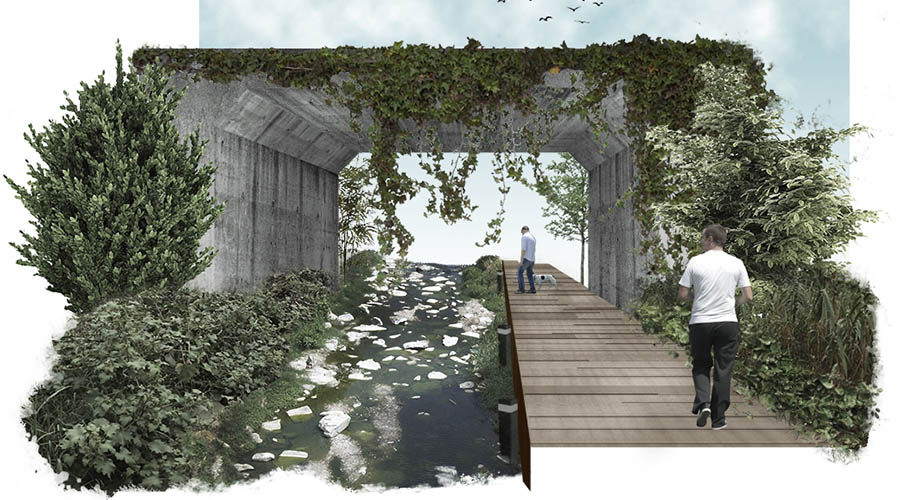
To work on these new axes of transformation we have a box of [project tools] organized in different drawers: biofilía, genius loci,accessibility, inclusion, circulation, space, security and comfort. With the sum of the different tools, taking into account the different starting conditions in each intervention point, we configure the proposal. In the hidden passages we favor slow mobility, and we seek the [renaturation] of the place through the vegetation of the environment.
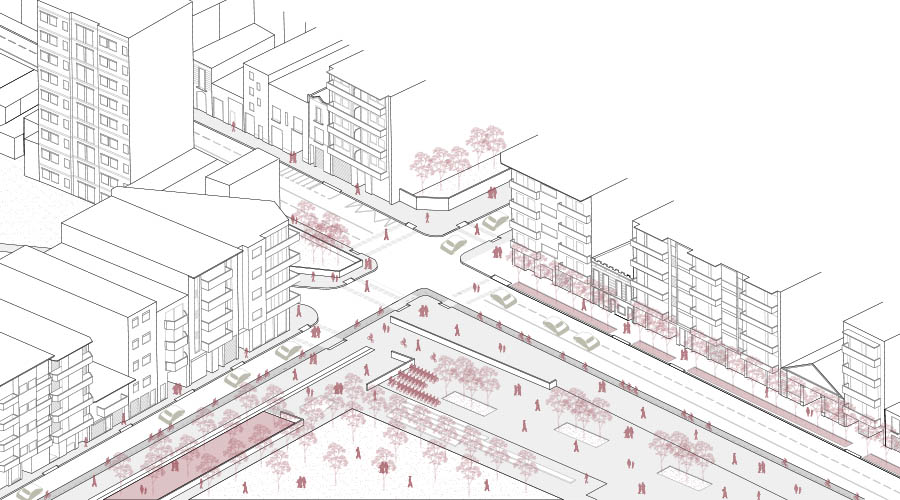
In the new [civic hubs], we provide more space for citizens, reducing the private vehicle and favoring the exchange of transport between collective and individual mobilities. In the industrial zone We recovered the old river and expanded the public space, looking for a point of meeting between the citizens of Molins and the users of the industrial zone.
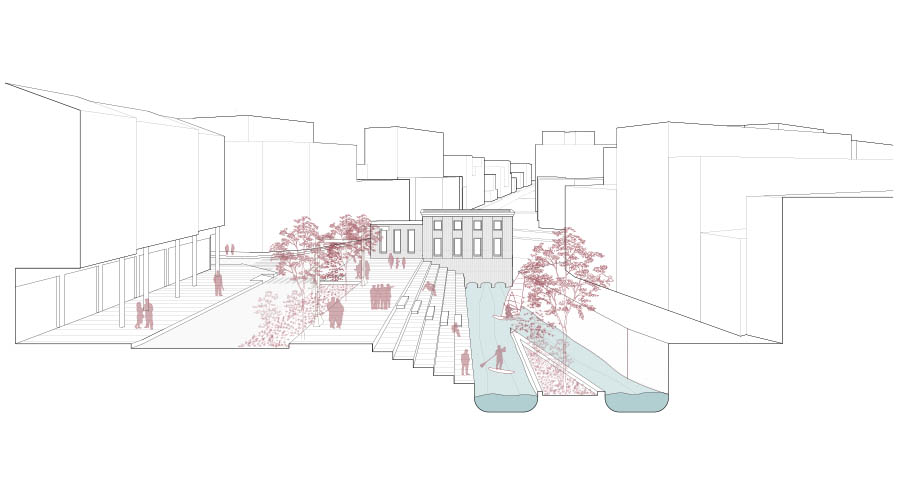
Finally, the [recovery of the Canal de la Infanta] generates new points of reference in the city and new passages, endowing Molins de Rei with spaces of mixed uses and connection with the other civic axes.